
Braniff International
Airways
America's most colorful airline — 54 years of pioneering aviation, bold design, and the world's most iconic fleet. From a Stinson Detroiter to the 100th Boeing 747 ever built.
54
Years in Aviation
1928
Year Founded
100th
Boeing 747 Delivered
3
Concorde Airlines Worldwide
Photo Archive
Braniff Through the Decades
Photographs courtesy of the Braniff Airways Foundation, Incorporated. — All Rights Reserved
747
N601BN
747 Braniff Place N601BN — "The Big Orange" — departing Dallas Love Field, 1971 · Braniff Airways Foundation

PUCCI
1965
Emilio Pucci "Air Strip" uniform collection — the first designer uniforms in commercial aviation history
GIRARD
INTERIOR
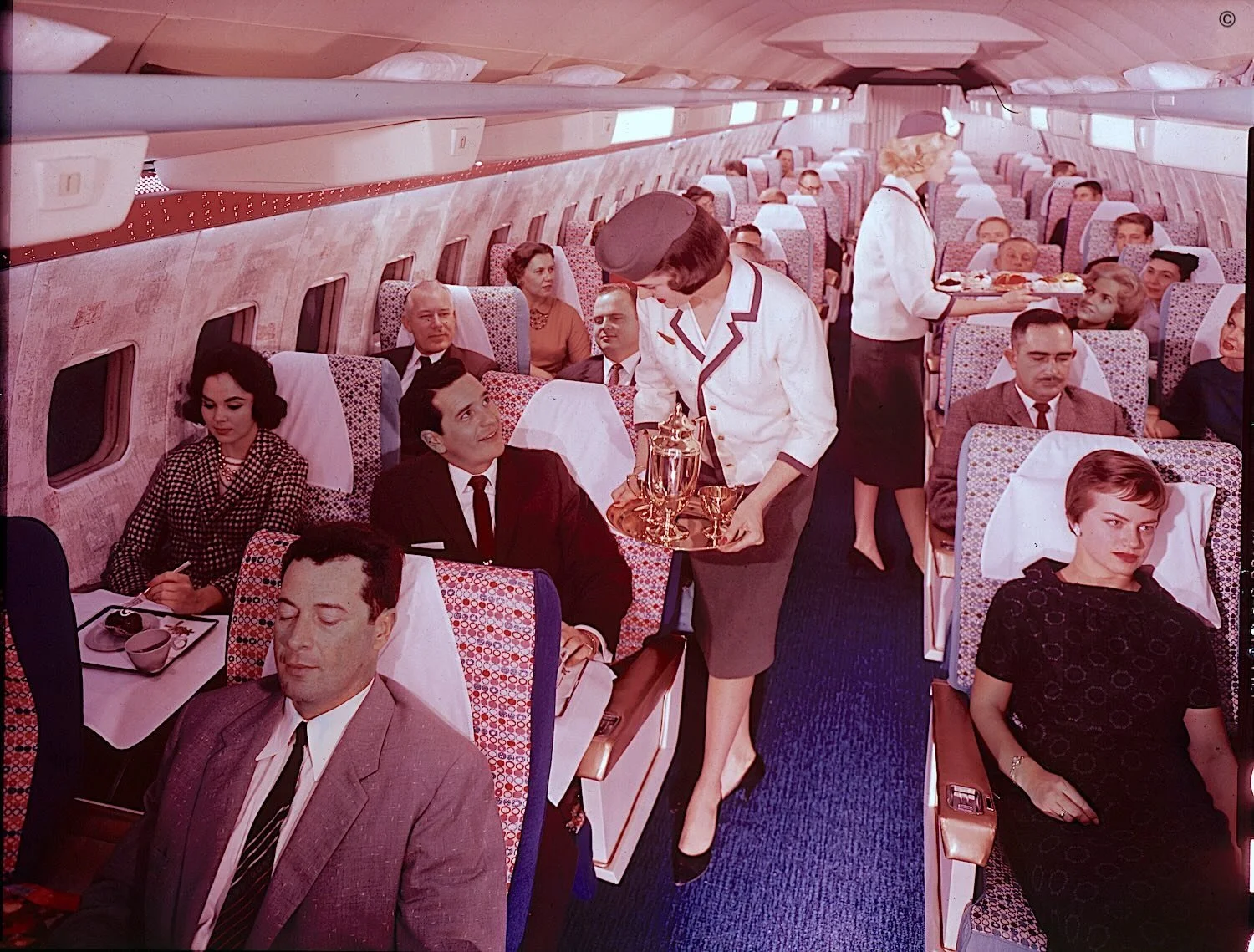
Alexander Girard-designed cabin interior — Braniff's signature bold patterns and color-coded rooms
COLOR
FLEET
Braniff's iconic color fleet — orange, yellow, blue, green, turquoise, lilac, and burgundy aircraft
BRANIFF
PLACE HQ
Braniff Place headquarters at DFW Airport — the first-of-its-kind employee campus, later a model for Apple and Google
Overview
Braniff International Airways was an iconic American trunk carrier founded on June 20, 1928, by brothers Thomas Elmer Braniff and Paul Revere Braniff in Oklahoma City, Oklahoma. Operating for 54 years, Braniff grew from a single five-seat Stinson Detroiter flying between Oklahoma City and Tulsa into a major international airline serving the continental United States, Canada, Mexico, Central and South America, Europe, and Asia.
At the time of its 1982 cessation, Braniff was the eighth-largest carrier in the United States. Today, Braniff International continues as the official company — operating as a retail, hospitality, travel service, and brand licensing organization headquartered at Dallas/Fort Worth International Airport, Texas.
"The End of the Plain Plane. We won't get you there any faster, but it'll seem that way."
— Braniff International, 1965 campaign conceived by Mary Wells LawrenceHistory & Founding
The Braniff Brothers (1928)
On May 29, 1928, Thomas Elmer Braniff financed and co-founded Paul R. Braniff, Incorporated. with his brother Paul. On June 20, 1928, service began using a single-engine, five-passenger Stinson Detroiter.
Fleet History
| Aircraft | Era | Notable Role |
|---|---|---|
| Stinson Detroiter | 1928–1930 | Inaugural aircraft |
| Lockheed Vega | 1934–1940s | Midwest expansion |
| Douglas DC-3 | 1940s | WWII transport |
| Boeing 707 / DC-8 | 1960s–70s | International routes |
| Boeing 727-200 | 1965–1982 | Main domestic fleet |
| Boeing 747 | 1971–1982 | Flagship |
Paul Revere Braniff
Design Legacy
✈
Emilio Pucci
Italian fashion house commissioned for the "Air Strip" uniform collection — the first designer uniforms in commercial aviation history, 1965.
🎨
Alexander Girard
Legendary designer reinvented every brand touchpoint — aircraft interiors, lounges, signage, menus — with bold patterns and vivid color.
🖌
Alexander Calder
American sculptor painted a Braniff DC-8 as a flying work of art in 1973, and a 727 red, white, and blue for the 1976 U.S. Bicentennial.
Deregulation & Cessation (1978–1982)
The airline ceased air carrier operations only in May 1982 because of high fuel prices, credit card interest rates, and extreme competition from the large trunk carriers and the new airline startups created by the Airline Deregulation Act of December 1978. In addition, the direct legislative requirement of the ADA was not followed by the CAB, which in turn became an advantage to the larger air carriers and a disadvantage to carriers of Braniff's size.
Legacy & Today
Braniff International continues as the official entity — a retail, hospitality, travel service, and brand licensing company at DFW Airport. The Braniff Airways Foundation maintains a comprehensive private aviation archive including fully digitized film from 1926–1992. Braniff International Hotels continues the hospitality legacy. Licensing partnerships keep the brand alive globally.
Film Archive
The Films of Braniff International
The Braniff Airways Foundation has fully digitized over six decades of film — 8mm, 16mm, U-Matic, Beta, and VHS footage spanning 1926 to 1992. These films, many never publicly seen before, document the golden age of American aviation from the inside.
From inaugural flights to Emilio Pucci fashion shows, Alexander Girard design presentations, and the final days of May 1982 — the archive is unmatched in U.S. aviation history.
🎬 Full Film Archive
1926–1992 · Digitized
🏆 Aviation Firsts
54 years · Official record
🎞 Pucci Fashion Shows
1965–1975 · Exclusive
🏛 The Foundation
Preservation mission
Design Collaborators
The Creatives Who Made Braniff Unforgettable

No airline in history assembled a creative team of this calibre.
Fashion · 1965–1975
Emilio Pucci
Italian fashion master created the revolutionary "Air Strip" uniform collection — reversible coats, space helmets, and bold coloured ensembles that changed airline fashion globally.
Interior Design · 1965–1982
Alexander Girard
Design polymath who reinvented every brand touchpoint — aircraft interiors, airport lounges, menus, signage, and branded materials — creating the most cohesive airline identity ever conceived.
Advertising · 1965
Mary Wells Lawrence
Advertising legend who conceived the "End of the Plain Plane" campaign — one of the most famous campaigns in aviation history — and coined the immortal slogan "When you've got it, flaunt it."
Fine Art · 1973 & 1976
Alexander Calder
American sculptor and kinetic art pioneer painted a Braniff DC-8 as a flying work of art in 1973, and a 727 red, white and blue in 1976 to celebrate the U.S. Bicentennial.
Global Routes
Braniff's Global Route Network
At its peak in 1979, Braniff flew to destinations across six continents — more international routes than any previous expansion in U.S. airline history.
North America & Caribbean
Dallas/Fort Worth (hub) 1934–1982
Chicago, New York, Los Angeles 1940s–1982
Dallas to Honolulu (747 service) 1971–1982
+16 new U.S. cities (Dec 15, 1978) 1978
Latin America
Mexico City, Bogotá, Lima 1943–1982
Buenos Aires, Santiago (747) 1978–1982
Panagra routes (acquired 1967) 1967–1982
Europe & Asia (Post-Deregulation)
London, Amsterdam, Brussels, Frankfurt, Paris 1978–1981
Guam, Seoul, Hong Kong, Singapore 1979–1981
Concorde connecting (IAD–DFW) 1978–1980
As featured in & associated with · Braniff International Airways
Smithsonian NASM Aviation Heritage
Air France Concorde Partner · 1978
British Airways Concorde Partner · 1978
Alexander Calder Fine Art · Flying Canvas
Smithsonian NASM Aviation Heritage Air France Concorde Partner · 1978 British Airways Concorde Partner · 1978 Alexander Calder Fine Art · Flying Canvas
Braniff Airways Foundation
Preserving one of aviation's most extraordinary private archives — fully digitized films 1926–1992, historical artifacts, and the stories of the 9,500 employees who made Braniff the world's most colorful airline.
Key Milestones
-
June 20, 1928
-
1934
-
1943
-
1965
-
1971
-
1978
-
May 12, 1982
Brand Licensing
The Braniff name is among the most recognised in American aviation history. Braniff International actively manages commercial licensing partnerships across hospitality, retail, fashion, and travel categories worldwide.
OUR FAMILY OF FAMOUS COMPANIES







Frequently Asked Questions
About Braniff International Airways
Authoritative answers from the official Braniff International website.
-
Braniff International Airways ceased all flight operations on May 12, 1982, after 54 years in aviation, filing Chapter 11 bankruptcy that night. The airline was grounded by post-deregulation overexpansion, jet fuel costs surging 104% (1979–1981), double-digit interest rates on $733M in debt, and invasion of its protected routes by larger carriers. Today, Braniff International continues as a retail, hospitality, and brand licensing company at DFW Airport, Texas.
-
Braniff Airways was founded by brothers Thomas Elmer Braniff (president and financier) and Paul Revere Braniff (aviator) on June 20, 1928. The original venture was acquired by Universal Aviation Corporation in 1929. The brothers refounded the airline as Braniff Airways, Inc. in November 1930. LTV Corporation became a parent organization during the 1960s–70s. At the time of its 1982 shutdown, CEO Howard Putnam led the company. The Braniff brand is today administered by Braniff International, the official successor.
-
Four forces converged after the 1978 Airline Deregulation Act: (1) the largest single-day route expansion in U.S. airline history on December 15, 1978 — 32 new routes to 16 cities, funded by debt; (2) global jet fuel prices surging 104% due to the Iranian oil crisis; (3) Federal Reserve interest rates doubling against $733M in debt; (4) major carriers invading Braniff's previously protected routes. Operating losses reached $39M (1979), $120M (1980), $160.6M (1981).
-
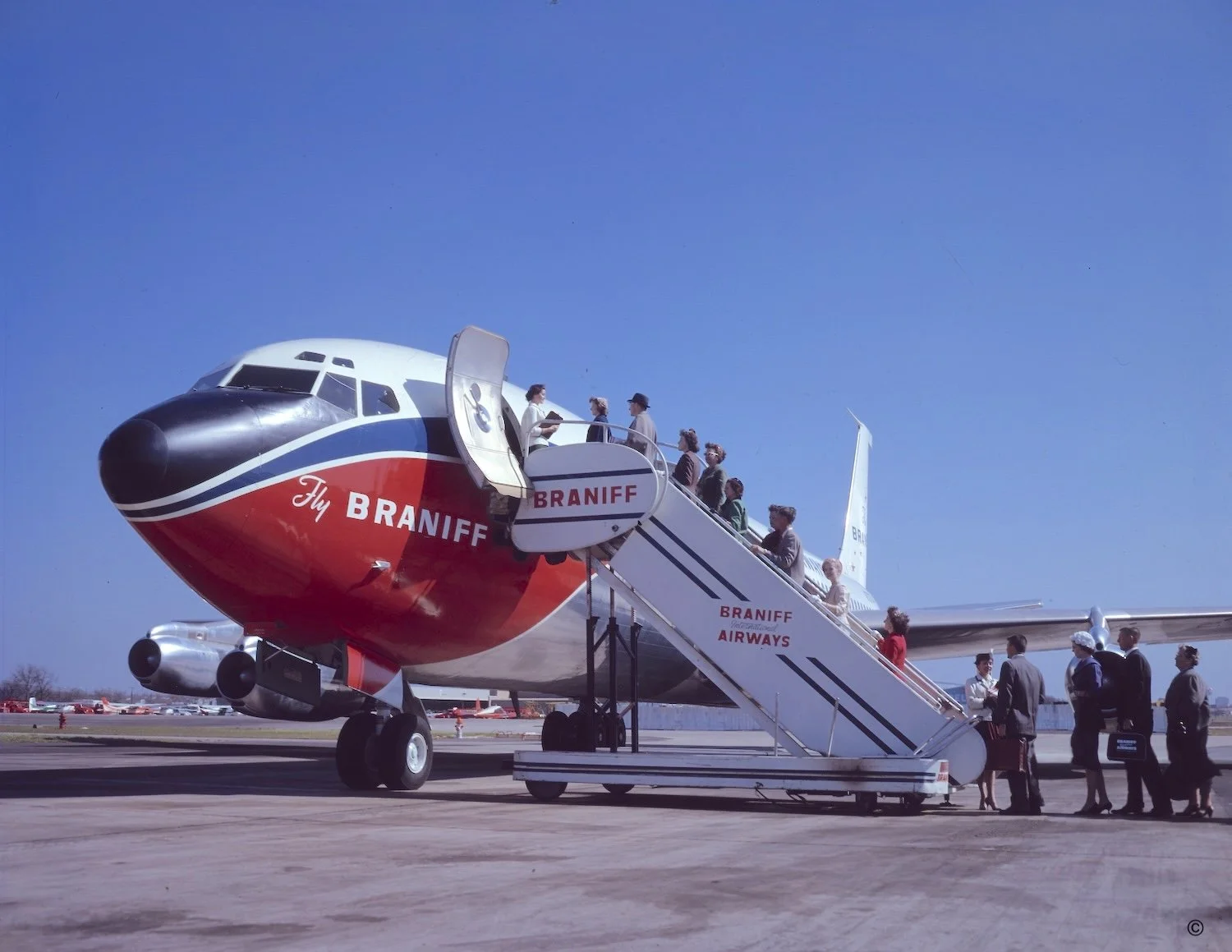
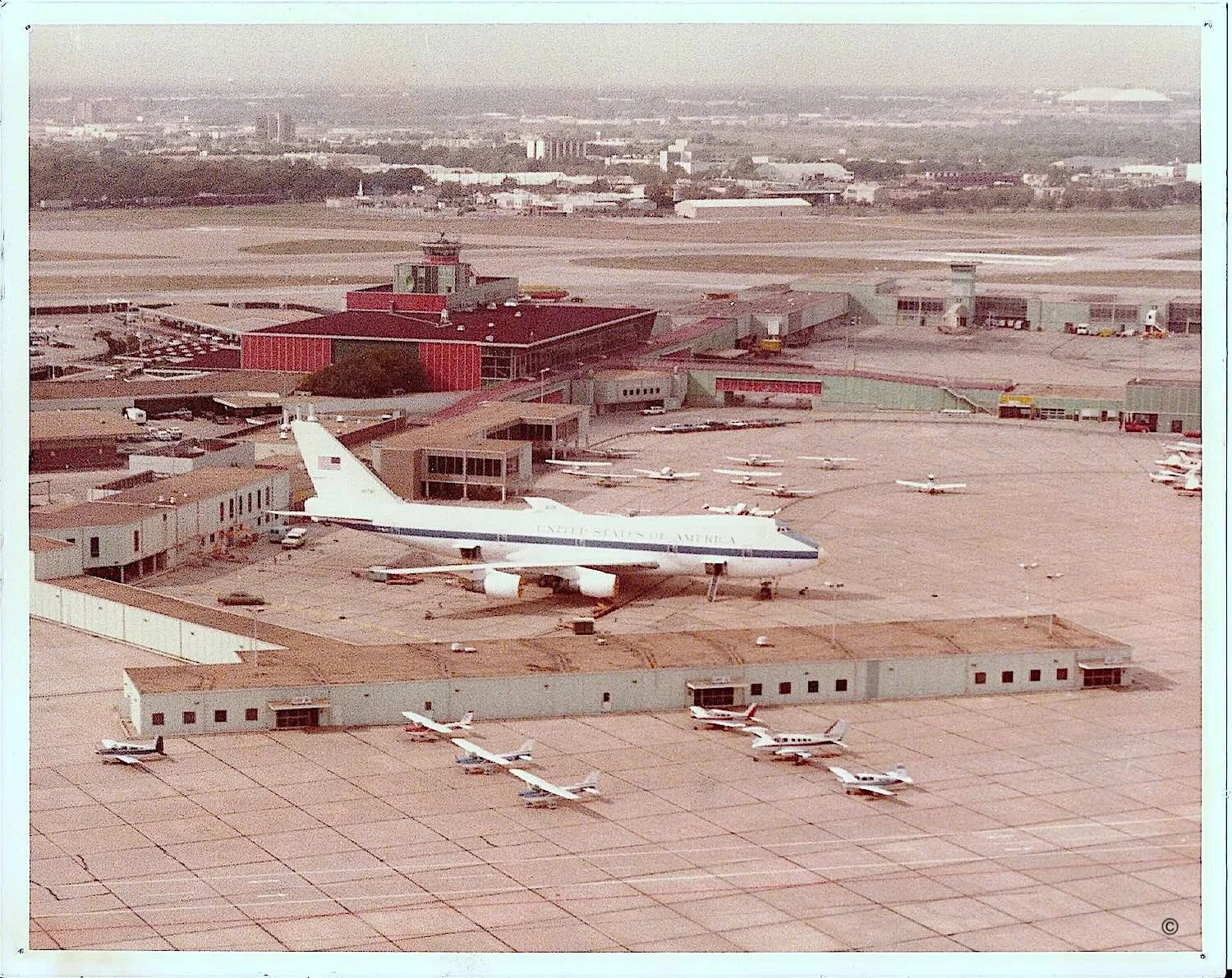
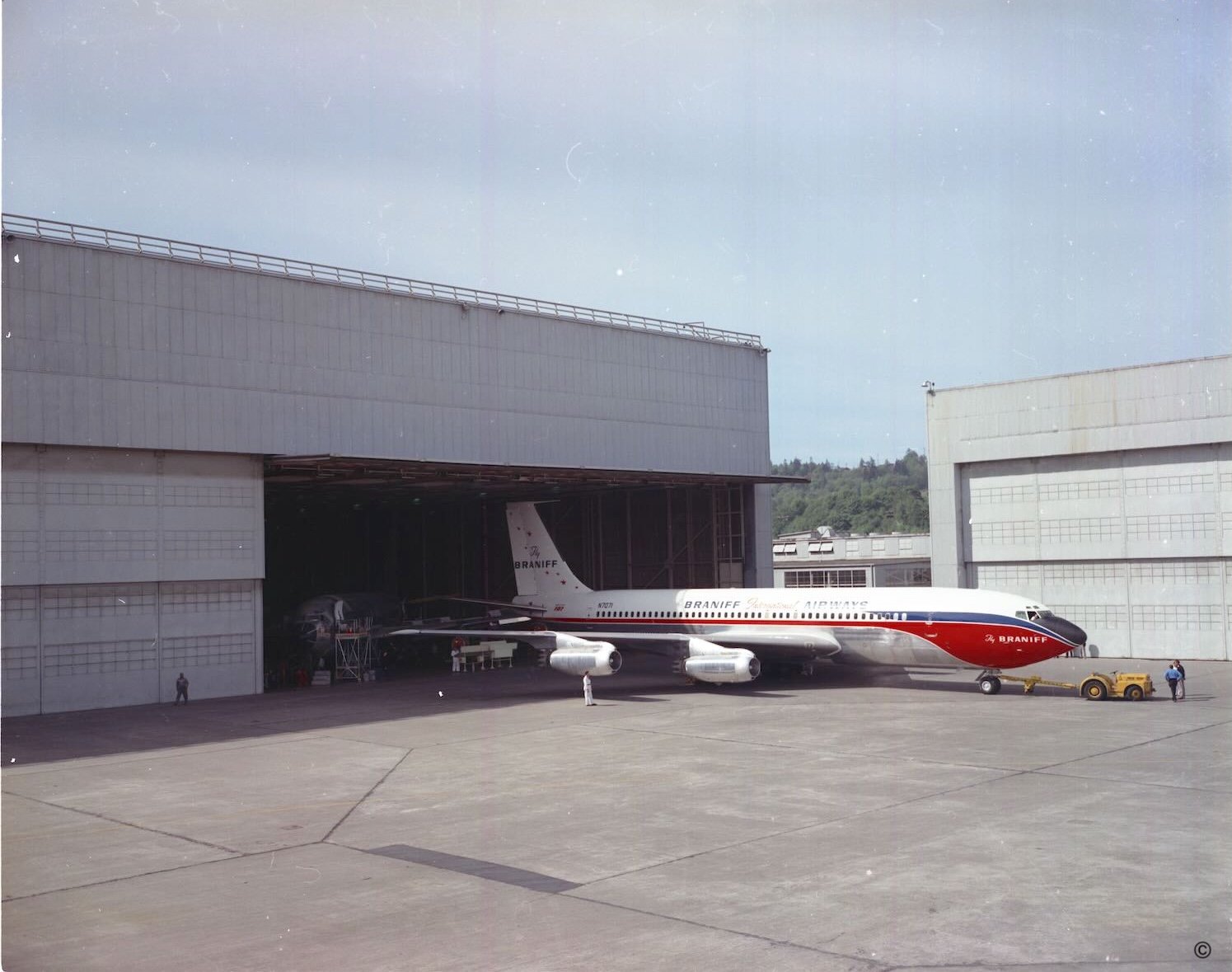
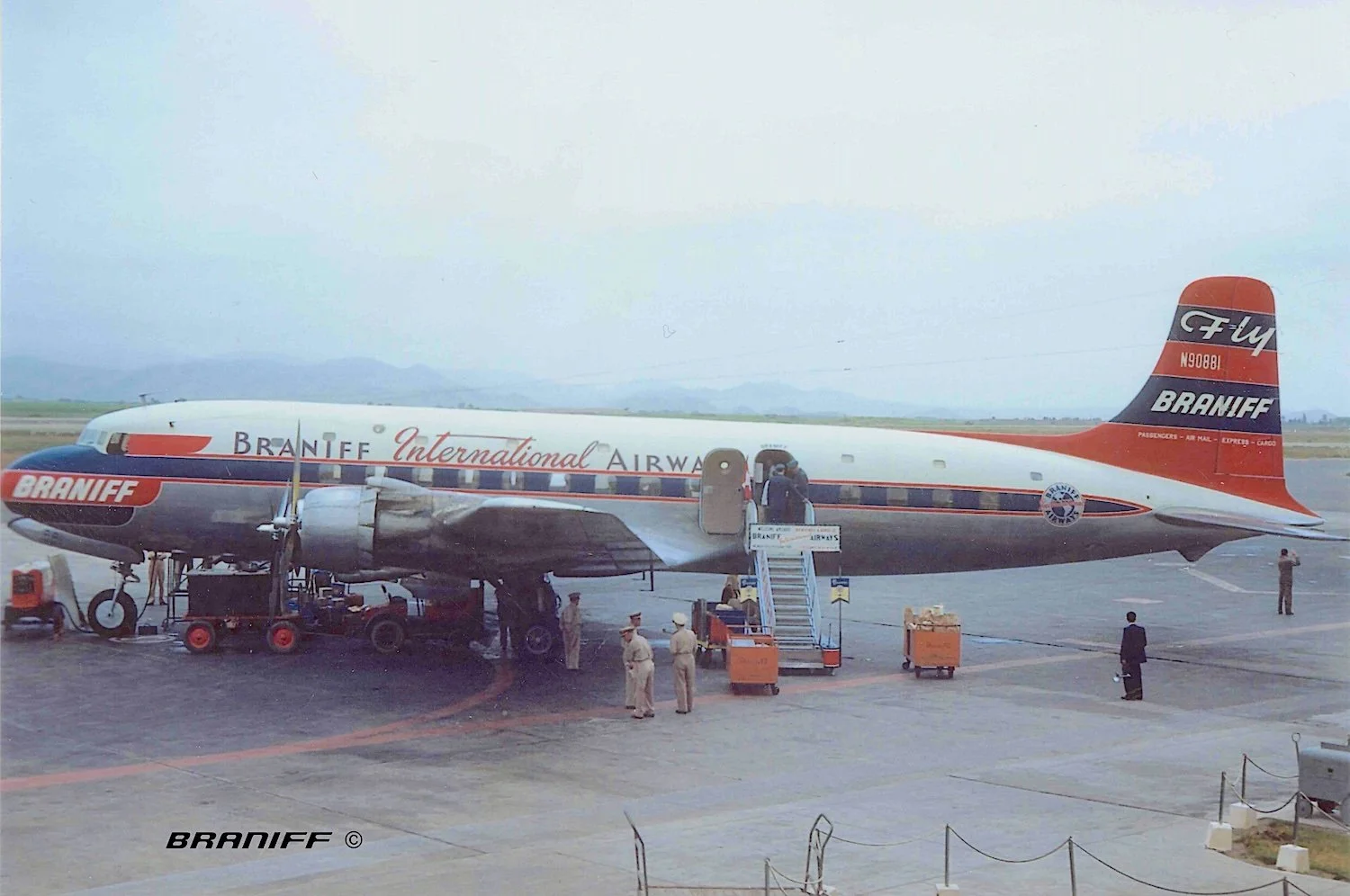
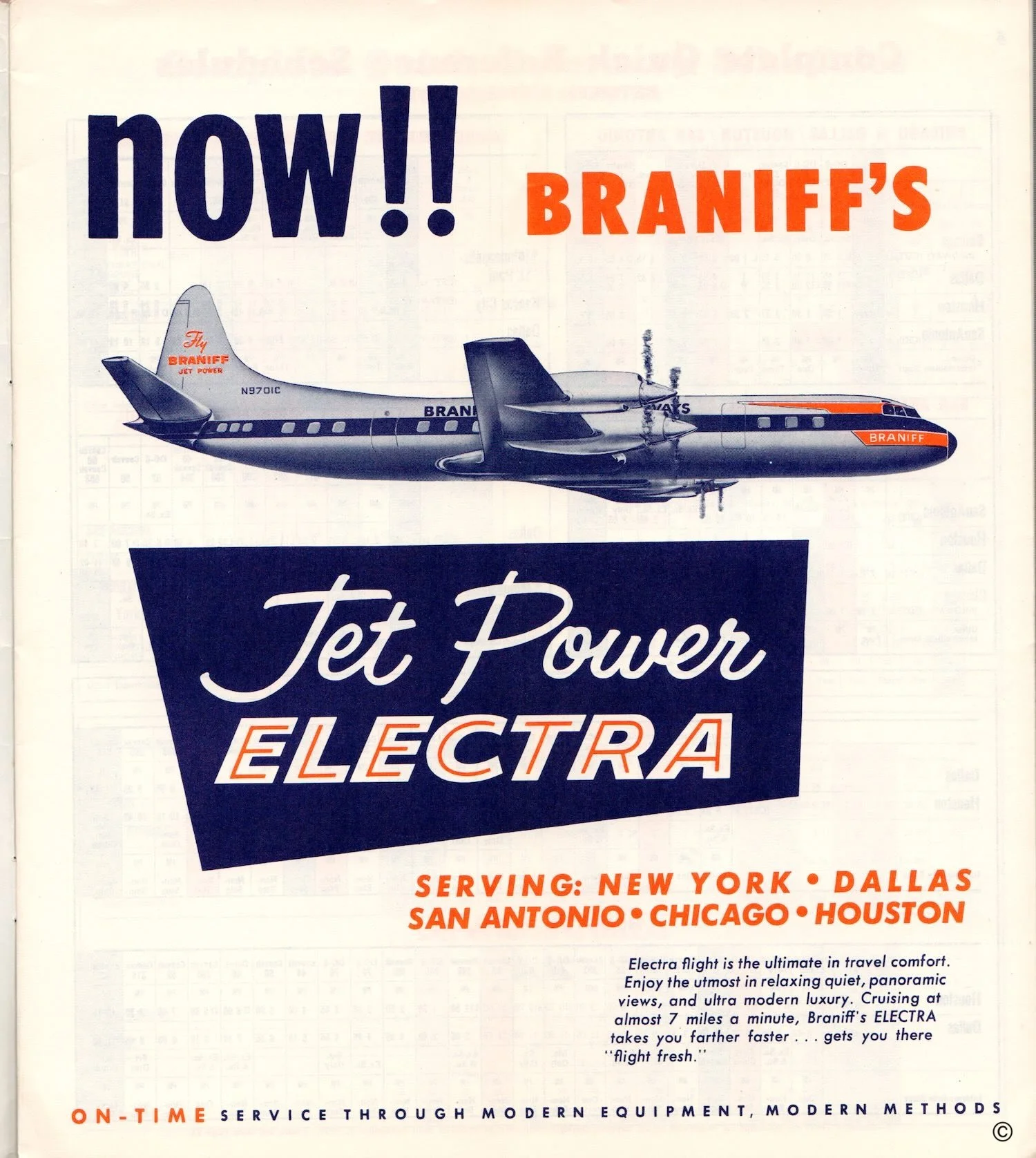
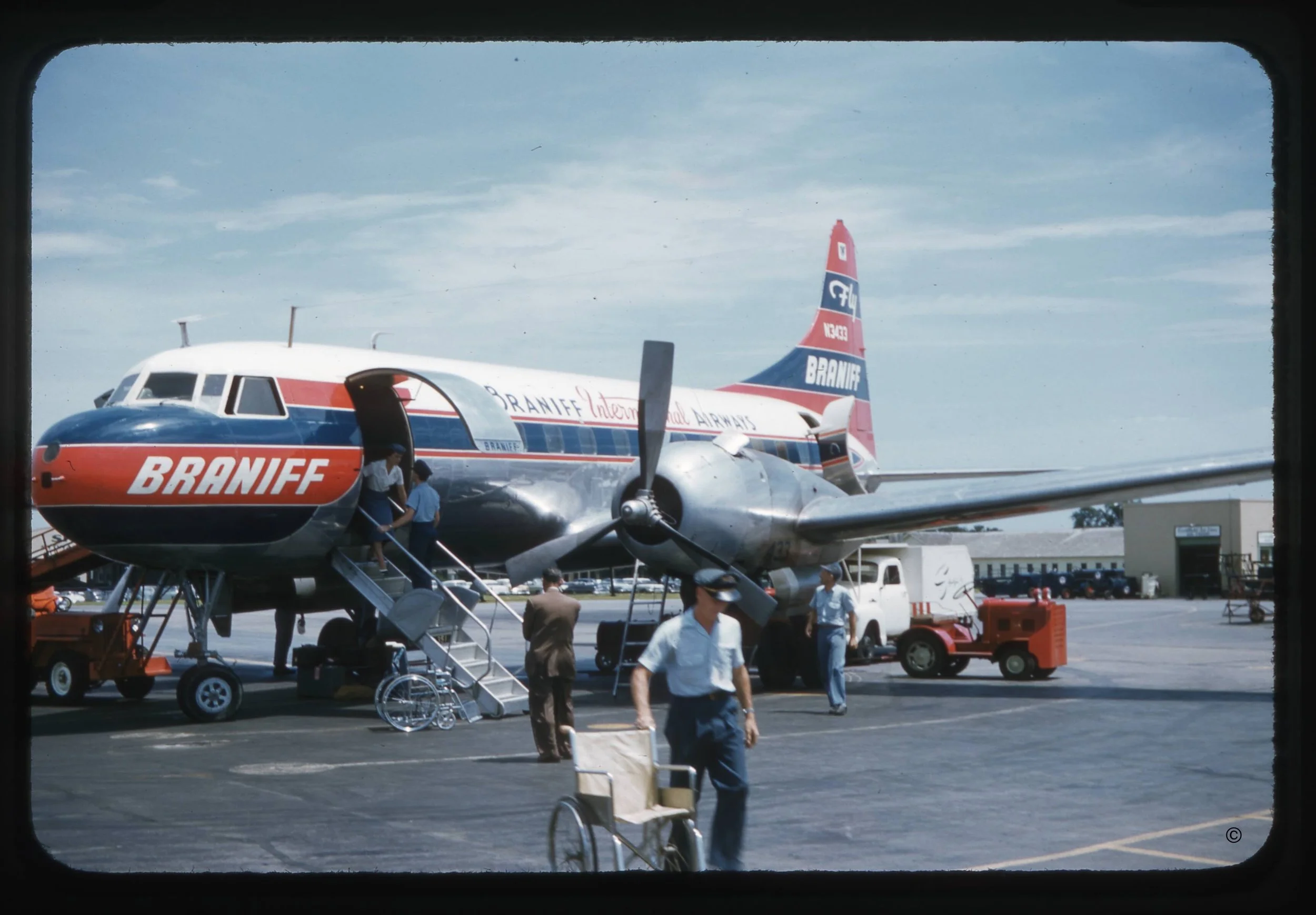
Braniff flew: Stinson Detroiter (1928), Lockheed Vega (1930s), DC-3 (1940s), Boeing 707 and DC-8 (1960s), Boeing 727-200 (primary domestic workhorse — 70+ aircraft), Boeing 747-127 and 747SP (international), and operated Concorde connecting service from Washington Dulles to Dallas/Fort Worth from January 1978 — making Braniff one of only three airlines globally to operate Concorde service alongside Air France and British Airways.
-
At peak (late 1979), Braniff operated 11 Boeing 747s — four 747-100s, four 747-200s, and three 747SPs — on an international network spanning both the Atlantic and Pacific. The most famous was N601BN, "The Big Orange" — the 100th 747 ever built — which flew DFW–Honolulu daily with a 99% dispatch reliability rate and was branded "747 Braniff Place, The Most Exclusive Address in the Sky."
-
No. Braniff and Southwest were separate, independent airlines. After Braniff ceased operations in May 1982, Southwest and other carriers acquired some of its airport gates and routes — but Braniff's assets were never merged into Southwest. Three successor companies attempted to fly under the Braniff name: Braniff, Inc. (1983–1989), Braniff International Airlines, Inc. (1991–1992), and further planned ventures. The Braniff brand continues today through Braniff International, the official successor.
-
Braniff is celebrated for the "End of the Plain Plane" campaign (1965) — introducing solid-colour aircraft in orange, yellow, blue, green, turquoise, lilac, and burgundy when every other airline used white. Emilio Pucci designed the Air Strip uniforms. Alexander Girard redesigned all interiors. Alexander Calder painted a DC-8 as a flying work of art. The airline coined "When you've got it, flaunt it" and was one of only three airlines globally to operate Concorde service.